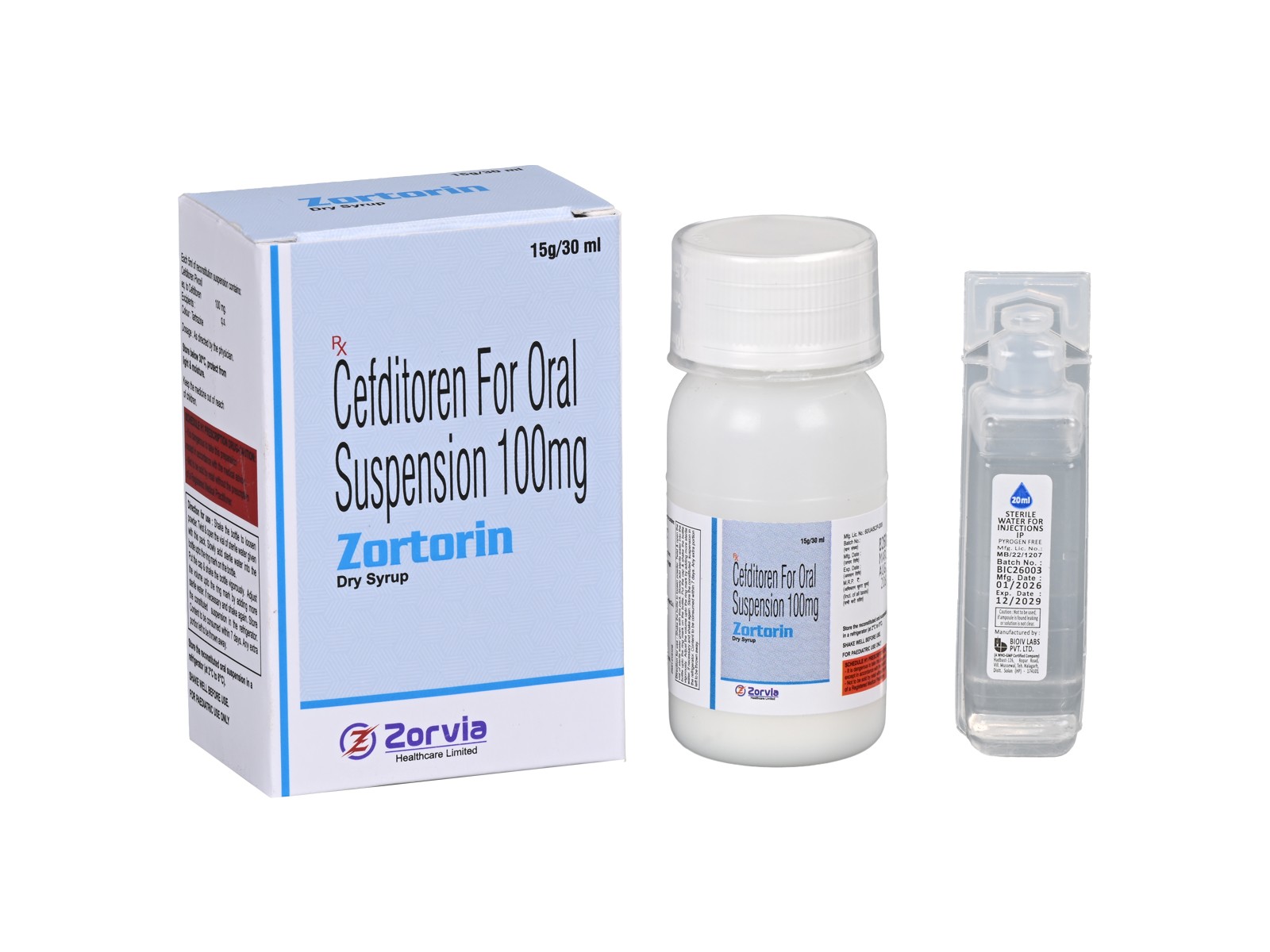
To be sold on retail on prescription of a Registered Medical Practitioner only.
Prescribing Information
1.0 Generic Name
Cefditoren for oral suspension 100mg
2.0 Qualitative and Quantitative Composition
Each 5ml of reconstitution suspension contains: Cefditoren Pivoxil eq. to Cefditoren……………100 mg. Excipients……………………. q.s.
3.0 Dosage Form and Strength
Dosage form – dry powder for suspension Strength: 100mg/5ml For Pediatric Use Only
4.0 Clinical Particulars
4.1 Therapeutic Indications
Cefditoren pivoxil is indicated for the treatment of mild to moderate infections in children (2 months to 12 years of age) which are caused by susceptible strains of the designated microorganisms in the conditions listed below:
Acute bacterial exacerbation of chronic bronchitis
Community-acquired pneumonia
Pharyngitis/Tonsillitis
Acute sinusitis
Uncomplicated skin and skin-structure infections
4.2 Posology and Method of Administration
Children with pneumonia, otitis media or sinusitis: In general, 3 mg/kg/dose; 3 times a day, after meals. The dosage may be increased up to 6 mg/kg/dose as needed, but should not exceed 200 mg, 3 times a day (600 mg / day).
For children with diseases other than above diseases In general, 3 mg/kg/dose; 3 times a day, after meals. The dosage may be adjusted according to the disease or the patient's age and symptoms, but should not exceed 200 mg, 3 times a day (600 mg /day).
Direction for use: Shake the bottle to loosen powder. Twist & open the vial of sterile water given with this pack. Slowly add sterile water into the bottle upto the ring mark on the bottle. Put the cap & shake the bottle vigorously. Adjust the volume upto the ring mark by adding more sterile water. If necessary, shake again. Store the constituted suspension in the refrigerator. Content to be consumed within 7 days. Any extra portion left to be thrown away.
4.3 Contraindications
Zortorin dry powder for suspension is contraindicated in patients with known allergy to the cephalosporin class of antibiotics or any of its components.
Zortorin dry powder for suspension is contraindicated in patients with carnitine deficiency or inborn errors of metabolism that may result in clinically significant carnitine deficiency, because use of cefditoren causes renal excretion of carnitine.
4.4 Special Warnings and Precautions for use
Warnings Before therapy with cefditoren pivoxil is instituted, careful inquiry should be made to determine whether the patient has had previous hypersensitivity reactions to cefditoren pivoxil, other cephalosporins, penicillins, or other drugs. If cefditoren pivoxil is to be given to penicillin- sensitive patients, caution should be exercised because cross- hypersensitivity among beta-lactam antibiotics has been clearly documented and may occur in up to 10% of patients with a history of penicillin allergy.
If an allergic reaction to cefditoren pivoxil occurs, the drug should be discontinued. Serious acute hypersensitivity reactions may require treatment with epinephrine and other emergency measures, including oxygen, intravenous fluids, intravenous antihistamines, corticosteroids, pressor amines, and airway management, as clinically indicated.
Pseudomembranous colitis has been reported with nearly all antibacterial agents, including cefditoren pivoxil, and may range in severity from mild to life-threatening. Therefore, it is important to consider this diagnosis in patients who present with diarrhea subsequent to the administration of antibacterial agents.
Treatment with antibacterial agents alters normal flora of the colon and may permit overgrowth of clostridia. Studies indicate that a toxin produced by Clostridium difficile (C. difficile) is a primary cause of antibiotic-associated colitis.
After the diagnosis of pseudomembranous colitis has been established, appropriate therapeutic measures should be initiated. Mild cases of pseudomembranous colitis usually respond to drug discontinuation alone. In moderate to severe cases, consideration should be given to management with fluids and electrolytes, protein supplementation, and treatment with an antibacterial drug clinically effective against C. difficile colitis.
Precautions Prescribing Zortorin dry powder for suspension in the absence of a proven or strongly suspected bacterial infection or a prophylactic indication is unlikely to provide benefit to the patient and increases the risk of the development of drug-resistant bacteria.
Zortorin dry powder for suspension are not recommended when prolonged antibiotic treatment is necessary, since other pivalate-containing compounds have caused clinical manifestations of carnitine deficiency when used over a period of months. No clinical effects of carnitine decrease have been associated with short-term treatment. The effects on carnitine concentrations of repeat short-term courses of Cefditoren pivoxil are not known.
With other antibiotics prolonged treatment may result in the possible emergence and overgrowth of resistant organisms. It should be taken with meals to enhance absorption. It may be taken concomitantly with oral contraceptives. It is not recommended when taken concomitantly with antacids or other drugs taken to reduce stomach acids.
As with other antibiotics, prolonged treatment may result in the possible emergence and overgrowth of resistant organisms. Careful observation of the patient is essential. If superinfection occurs during therapy, appropriate alternative therapy should be administered.
Cephalosporins may be associated with a fall in prothrombin activity. Those at risk include patients with renal or hepatic impairment, or poor nutritional state, as well as patients receiving a protracted course of antimicrobial therapy, and patients previously stabilized on anticoagulant therapy. Prothrombin time should be monitored in patients at risk and exogenous vitamin K administered as indicated. In clinical trials, there was no difference between cefditoren and comparator cephalosporins in the incidence of increased prothrombin time.
4.5 Drug Interactions
Oral Contraceptives Multiple doses of cefditoren pivoxil had no effect on the pharmacokinetics of ethinyl estradiol, the estrogenic component in most oral contraceptives.
Antacids Co-administration of a single dose of an antacid which contained both magnesium (800 mg) and aluminum (900 mg) hydroxides reduced the oral absorption of a single 400 mg dose of cefditoren pivoxil administered following a meal, as evidenced by a 14% decrease in mean Cmax and an 11% decrease in mean AUC. Although the clinical significance is not known, it is not recommended that cefditoren pivoxil be taken concomitantly with antacids.
H2-Receptor Antagonists Co-administration of a single dose of intravenously administered famotidine (20 mg) reduced the oral absorption of a single 400 mg dose of cefditoren pivoxil administered following a meal, as evidenced by a 27% decrease in mean Cmax and a 22% decrease in mean AUC. Although the clinical significance is not known, it is not recommended that cefditoren pivoxil be taken concomitantly with H2 receptor antagonists.
Probenecid As with other ß-lactam antibiotics, co-administration of probenecid with cefditoren pivoxil resulted in an increase in the plasma exposure of cefditoren, with a 49% increase in mean Cmax, a 122% increase in mean AUC, and a 53% increase in t1/2.
Drug/Laboratory Test Interactions Cephalosporins are known to occasionally induce a positive direct Coombs' test. A false-positive reaction for glucose in the urine may occur with copper reduction tests (Benedict's or Fehling's solution), but not with enzyme-based tests for glycosuria (e.g., CLINISTIX®, TES-TAPE®). As a false-negative result may occur in the ferricyanide test, it is recommended that either the glucose oxidase or hexokinase method be used to determine blood/plasma glucose levels in patients receiving cefditoren pivoxil.
4.6 Use in Special Population
Pregnancy This product is not intended for use in Pregnancy. This is for Pediatric Use Only.
Lactation This product is not intended for use in lactating woman. This is for Pediatric Use Only.
4.7 Effects on Ability to Drive and Use Machines
No studies on the effect on the ability to drive & use machines have been carried out.
4.8 Undesirable Effects
In a post-marketing surveillance study of cefditoren granules conducted in Japan, a total of 5,821 clinical cases were collected from 875 medical facilities. Adverse drug reactions were reported in 136 cases (2.34%), accounting for a total of 146 adverse events. The most frequently observed adverse reactions were gastrointestinal disorders, reported in 121 cases (2.08%), including diarrhea and loose stools. Skin and skin structure disorders were reported in 10 cases (0.17%), primarily consisting of rash and urticaria.
Serious side effects (<0.1%) Serious adverse reactions such as shock, anaphylaxis, pseudomembranous colitis, toxic epidermal necrolysis (TEN), Stevens–Johnson syndrome, interstitial pneumonia, liver function disorders, severe renal impairment, agranulocytosis, and hemolytic anemia have been reported. If any of these conditions are suspected, administration should be discontinued immediately and appropriate medical measures should be taken.
Hypoglycemia associated with hypocarnitinemia (frequency unknown) has been reported in pediatric patients, particularly infants, receiving antibiotics containing pivaloyl (pivoxil) groups. Clinical manifestations may include hypoglycemic symptoms such as convulsions and impaired consciousness. If such symptoms occur, discontinue administration promptly and institute appropriate treatment measures.
Vitamin K deficiency symptoms (hypoprothrombinemia, bleeding tendency etc.), vitamin B deficiency symptoms (glossitis, mouth ulcer, anorexia, neuritis etc.)
Other
-
Headache, dizziness, edema, numbness
Reporting of Suspected Adverse Reactions Reporting suspected adverse reactions after authorization of the medicinal product is important. It allows continued monitoring of the benefit/risk balance of the medicinal product. Healthcare professionals are asked to report any suspected adverse reactions via email to: medico@zorvia.com By reporting side effects, you can help provide more information on the safety of this medicine.
4.9 Overdose
Cefditoren pivoxil overdosage reports in humans are not available. However, based on experience with other β lactam antibiotics, reported adverse effects following overdosage include nausea, vomiting, epigastric discomfort, diarrhea, and convulsions. Hemodialysis may facilitate the removal of cefditoren from the systemic circulation, particularly in patients with impaired renal function; approximately 30% reduction in plasma concentrations has been observed after 4 hours of hemodialysis.
In cases of overdosage, gastric contents should be removed by aspiration and/or gastric lavage as appropriate. Vital signs should be closely monitored, and symptomatic and supportive treatment should be instituted as necessary.
5.0 Pharmacological Properties
5.1 Mechanism of Action
Cefditoren is a bactericidal cephalosporin antibiotic that exerts its antimicrobial effect by inhibiting bacterial cell wall synthesis. This action is mediated through its strong affinity for penicillin binding proteins (PBPs), leading to disruption of peptidoglycan cross linking and subsequent bacterial cell lysis. Cefditoren demonstrates high binding affinity for PBPs in a wide range of susceptible bacterial species.
5.2 Pharmacodynamic Properties
Antibacterial Activity Cefditoren pivoxil is an orally administered prodrug that is hydrolyzed to its active form, cefditoren, during absorption in the intestinal wall. Cefditoren exhibits broad spectrum antibacterial activity in vitro against both Gram positive and Gram-negative organisms. It demonstrates particularly strong activity against Gram positive bacteria, including Staphylococcus spp., Streptococcus spp., and Streptococcus pneumoniae. Among Gram negative pathogens, cefditoren is active against Escherichia coli, Moraxella (Branhamella) catarrhalis, Klebsiella spp., Proteus spp., and Haemophilus influenzae. In addition, cefditoren shows activity against anaerobic bacteria such as Peptostreptococcus spp., Propionibacterium acnes, Bacteroides spp., and Prevotella spp. Notably, cefditoren is active against β lactamase–non producing ampicillin resistant (BLNAR) H. influenzae and is stable in vitro against β lactamase–producing strains.
5.3 Pharmacokinetic Properties
Microbiology Cefditoren is a cephalosporin with antibacterial activity against gram-positive and gram-negative pathogens. The bactericidal activity of cefditoren results from the inhibition of cell wall synthesis via affinity for penicillin-binding proteins (PBPs). Cefditoren is stable in the presence of a variety of ß-lactamases, including penicillinases and some cephalosporinases. Cefditoren has been shown to be active against most strains of the following bacteria, both in vitro and in clinical infections, as described in the indications section.
Aerobic Gram-Positive Microorganisms Staphylococcus aureus (methicillin-susceptible strains, including ß-lactamase-producing strains) Note: Cefditoren is inactive against methicillin-resistant Staphylococcus aureus Streptococcus pneumoniae (penicillin-susceptible strains only) Streptococcus pyogenes
The following in vitro data are available, but their clinical significance is unknown. Cefditoren exhibits in vitro minimum inhibitory concentrations (MICs) of ≤0.125 µg/mL against most (≥90%) strains of the following bacteria; however, the safety and effectiveness of cefditoren in treating clinical infections due to these bacteria have not been established in adequate and well-controlled clinical trials.
Aerobic Gram-Positive Microorganisms Streptococcus agalactiae Streptococcus Groups C and G Streptococcus, viridans group (penicillin-susceptible and -intermediate strains)
6.0 Nonclinical Properties
6.1 Animal Toxicology or Pharmacology
Not available
7.0 Description
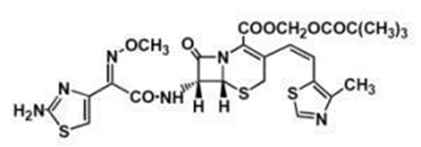
Zortorin dry powder for suspension contain cefditoren pivoxil, a semi-synthetic cephalosporin antibiotic for oral administration. It is a prodrug which is hydrolyzed by esterases during absorption, and the drug is distributed in the circulating blood as active cefditoren.
Chemically, cefditoren pivoxil is (-)-(6R,7R)-2,2-dimethylpropionyloxymethyl 7-[(Z)-2-(2-aminothiazol-4-yl)-2-methoxy-iminoacetamido]-3-[(Z)-2-(4-methylthiazol-5-yl)ethenyl]-8-oxo-5-thia-1-azabicyclo[4.2.0]oct-2-ene-2-carboxylate.
The empirical formula is C25H28N6O7S3 and the molecular weight is 620.73.
8. Pharmaceutical particulars
8.1 Incompatibilities
None.
8.2 Shelf-Life
Refer on pack.
8.3 Packaging Information
30 ml bottle
8.4 Storage and Handling Instructions
Store below 30°C. Protect from light and moisture. Keep the medicine out of reach of children. Store the reconstituted oral suspension in a refrigerator (at 2°C to 8°C).
9.0 Patient Counselling Information
Parents or caregivers should be counseled that antibacterial drugs including cefditoren pivoxil should only be used to treat bacterial infections. They do not treat viral infections (e.g., the common cold). When cefditoren pivoxil is prescribed to treat a bacterial infection, parents should be told that although it is common to feel better early in the course of therapy, the medication should be taken exactly as directed.
Skipping doses or not completing the full course of therapy may (1) decrease the effectiveness of the immediate treatment and (2) increase the likelihood that bacteria will develop resistance and will not be treatable by cefditoren pivoxil or other antibacterial drugs in the future.
Cefditoren pivoxil should be taken with meals to enhance absorption.
It is not recommended that Cefditoren pivoxil be taken concomitantly with antacids or other drugs taken to reduce stomach acids.