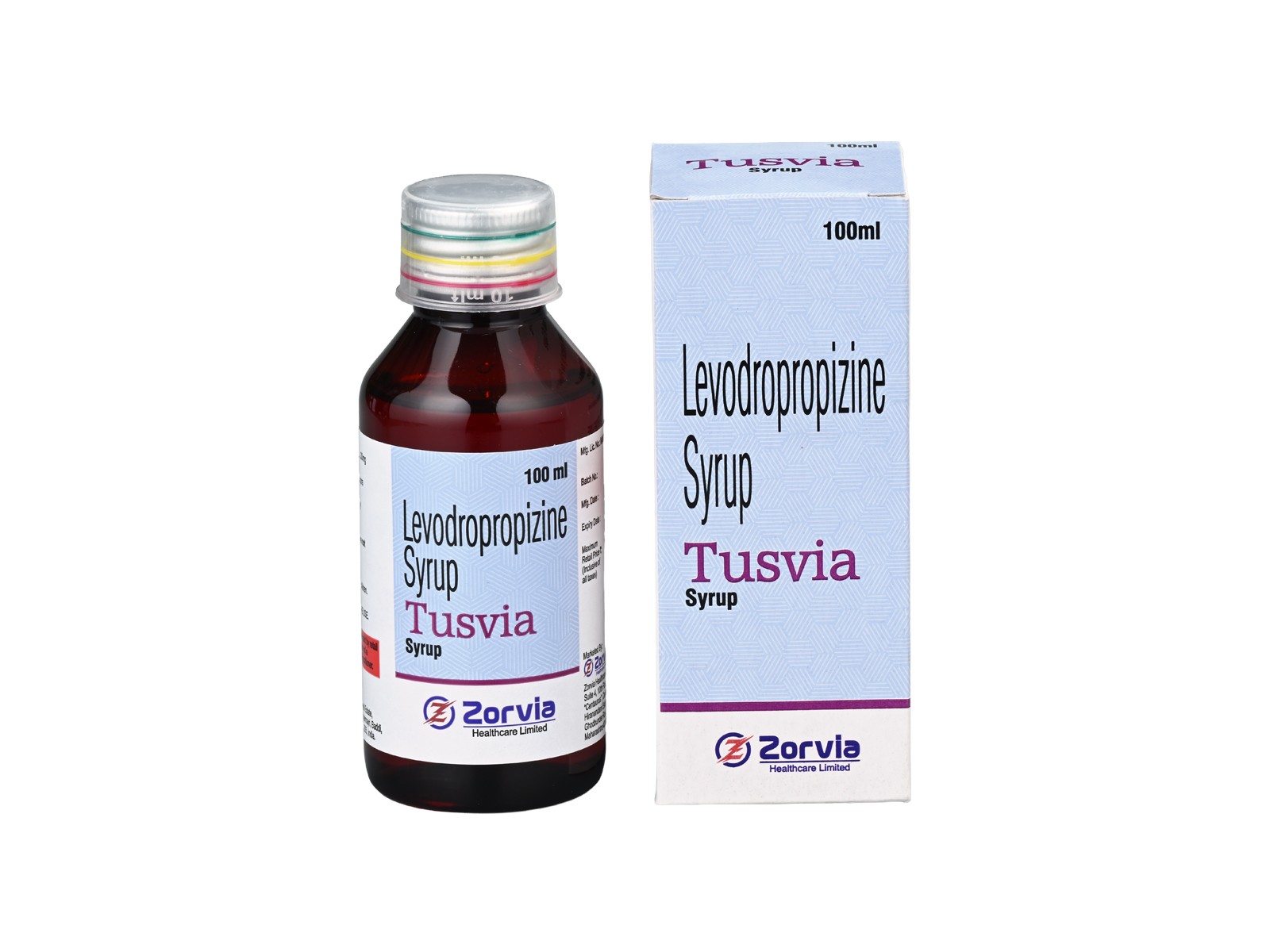
Patient Information Leaflet: Information For the User
Patient Information Leaflet
Read all this information carefully before you start taking this medicine.
If you have any further questions, ask your doctor, pharmacist, or nurse.
This medicine has been prescribed for you only. Do not pass it on to others. It may harm them, even if their signs of illness are the same as yours.
If you get any side effects, talk to your doctor, pharmacist, or nurse.
What is there in this page?
What Tusvia Syrup is and what it is used for
What you need to know before you take Tusvia Syrup
How to take Tusvia Syrup
Possible side effects
How to store Tusvia Syrup
Contents of the pack and other information
1. What Tusvia Syrup is and what it is used for
Tusvia Syrup contains levodropropizine, which belongs to a group of medicines called antitussives (cough suppressants).
It is used for the symptomatic treatment of dry (non-productive) cough.
2. What you need to know before you take Tusvia Syrup
Do not take Tusvia Syrup if:
You are allergic to levodropropizine or any of the ingredients
You have excessive mucus production (bronchorrhoea)
You have impaired mucociliary function (e.g., Kartagener syndrome)
You are pregnant or breastfeeding
It is for children below 2 years of age
Warnings and precautions Talk to your doctor before taking this medicine if:
You have kidney or liver problems
You are elderly
Your cough persists or has an underlying cause requiring treatment
Do not take this medicine with mucolytics or expectorants unless advised by your doctor.
Other medicines and Tusvia Syrup
No significant interactions are known
Use caution if you are taking sedative medicines
Pregnancy and breastfeeding
Do not use during pregnancy
Do not use while breastfeeding
Ask your doctor for advice before taking any medicine.
Driving and using machines This medicine may cause:
Drowsiness
Dizziness
Do not drive or operate machinery if affected.
3. How to take Tusvia Syrup
Always take this medicine exactly as your doctor has told you.
Recommended doses:
Adults and children ≥12 years: 10 ml (60 mg) up to 3 times daily
Children 6–12 years: 2–5 ml up to 3 times daily
Children 2–6 years: 2–3 ml up to 3 times daily
Maintain at least 6 hours interval between doses.
Important instructions:
Take preferably away from meals
Use for short duration only
Stop once symptoms improve
If you take more than you should You may experience fast heart rate (tachycardia) Seek medical attention immediately
If you forget to take a dose
Do not take a double dose
Continue with the next scheduled dose
4. Possible side effects
Like all medicines, this medicine can cause side effects, although not everybody gets them.
Common side effects:
Nausea
Indigestion
Diarrhoea
Vomiting
Rare or very rare side effects:
Palpitations, tachycardia
Allergic reactions (rash, itching, swelling)
Drowsiness, tremor, dizziness
Breathing difficulty
Low blood pressure
Weakness
Severe allergic reaction (anaphylaxis)
Reporting of side effects If you get any side effects, talk to your doctor or pharmacist. You can also report side effects via email: medico@zorvia.com
5. How to store Tusvia Syrup
Keep out of the sight and reach of children
Store below 30°C
Protect from light
Do not use after the expiry date stated on the pack
6. Contents of the pack and other information
What Tusvia Syrup contains:
Active substance: Levodropropizine 30 mg per 5 ml
What the medicine looks like and contents of the pack: Syrup in 100 ml bottle
Marketing Authorization Holder
Zorvia Healthcare Limited Suite 4, 10th Floor, Centaurus, Central Avenue, Hiranandani Estate, Ghodbunder Road, Thane West, Maharashtra, India—400607.