To be sold on retail on prescription of a Registered Medical Practitioner only.
1. Generic Name
Oseltamivir for Oral Suspension IP
2.0 Qualitative and Quantitative Composition
Each ml of the reconstituted suspension contains: Oseltamivir Phosphate IP Equivalent to Oseltamivir.................................. 12 mg Excipients: Q.S. Colour: Titanium Dioxide IP
3. Dosage Form and Strength
Oral Suspension 12mg/ml
4.0 Clinical Particulars
4.1 Therapeutic Indications
For treatment of influenza.
In the treatment of children 6 to 12 months of age during a pandemic influenza outbreak.
4.2 Posology and Method of Administration
For infants and children 1 year of age or older: The recommended oral dose of oseltamivir oral suspension for paediatric patients aged 1 year and older, based on body weight, is shown in the table below.
Body Weight (kg)
Recommended Dose for 5 Days
Recommended dose for 10 days* (Immunocompromised Patients)
Volume of Oral Suspension (12 mg/mL) for each dose
10 kg to 15 kg
30 mg twice daily
30 mg twice daily
2.5 ml twice daily
>15 kg to 23 kg
45 mg twice daily
45 mg twice daily
3.8 ml twice daily
>23 kg to 40 kg
60 mg twice daily
60 mg twice daily
5.0 ml twice daily
>40 kg
75 mg twice daily
75 mg twice daily
6.2 ml twice daily
*The recommended duration in immunocompromised patients (≥1 year old) is 10 days.
Children weighing > 40 kg and who are able to swallow capsules may receive treatment with the adult dosage of 75 mg capsules as an alternative to the recommended dose of Tamibid suspension.
For infants less than 1 year of age: The recommended treatment dose for infants 0 - 12 months of age is 3 mg/kg twice daily. This is based upon pharmacokinetic and safety data indicating that this dose in infants 0 - 12 months provides plasma concentrations of the pro-drug and active metabolite that are anticipated to be clinically efficacious with a safety profile comparable to that seen in older children and adults.
Dosing table of oseltamivir for children less than 1 year of age: 3 mg/kg twice daily
Body Weight
Recommended dose for 5 days
Recommended dose for 10 days* (Immunocompromised patients)
Amount of oral suspension to withdraw (12 mg per 1 mL)
3 kg
9 mg twice daily
9 mg twice daily
0.75 mL twice daily
3.5 kg
10.5 mg twice daily
10.5 mg twice daily
0.875 mL twice daily
4 kg
12 mg twice daily
12 mg twice daily
1.0 mL twice daily
4.5 kg
13.5 mg twice daily
13.5 mg twice daily
1.125 mL twice daily
5 kg
15 mg twice daily
15 mg twice daily
1.25 mL twice daily
5.5 kg
16.5 mg twice daily
16.5 mg twice daily
1.375 mL twice daily
6 kg
18 mg twice daily
18 mg twice daily
1.5 mL twice daily
>6–7 kg
21 mg twice daily
21 mg twice daily
1.75 mL twice daily
>7–8 kg
24 mg twice daily
24 mg twice daily
2.0 mL twice daily
>8–9 kg
27 mg twice daily
27 mg twice daily
2.25 mL twice daily
>9–10 kg
30 mg twice daily
30 mg twice daily
2.5 mL twice daily
*The recommended duration in immunocompromised infants (0-12 months old) is 10 days.
This dosing recommendation is not intended for premature infants, i.e. those with a post-conceptual age less than 36 weeks. Insufficient data are available for these patients, in whom different dosing may be required due to the immaturity of physiological functions.
Prevention
Post-exposure prevention
For infants and children 1 year of age or older:
The recommended post-exposure prevention dose of Tamibid suspension is
Body Weight
Recommended dose for 10 days
Immunocompromised Patients: Recommended dose for 10 days
Amount of oral suspension to withdraw (12 mg per 1 mL)
10 kg to 15 kg
30 mg once daily
30 mg once daily
2.5 mL once daily
> 15 kg to 23 kg
45 mg once daily
45 mg once daily
3.75 mL once daily
> 23 kg to 40 kg
60 mg once daily
60 mg once daily
5 mL once daily
> 40 kg
75 mg once daily
75 mg once daily
6.25 mL once daily
Children weighing > 40 kg and who are able to swallow capsules may receive prophylaxis with a 75 mg capsule as an alternative to the recommended dose of Tamibid suspension.
For infants less than 1 year of age
The recommended prophylaxis dose for infants less than 12 months during a pandemic influenza outbreak is half of the daily treatment dose. This is based upon clinical data in children > 1 year of age and adults showing that a prophylaxis dose equivalent to half the daily treatment dose is clinically efficacious for the prevention of influenza.
The following dosing regimen is recommended for infants less than 1 year of age
Dosing table of oseltamivir for children below one year of age: 3 mg/kg once daily
Body Weight
Recommended dose for 10 days
Immunocompromised Patients: Recommended dose for 10 days
Amount of oral suspension to withdraw (12 mg per 1 mL)
3 kg
9 mg once daily
9 mg once daily
0.75 mL once daily
3.5 kg
10.5 mg once daily
10.5 mg once daily
0.9 mL once daily
4 kg
12 mg once daily
12 mg once daily
1.0 mL once daily
4.5 kg
13.5 mg once daily
13.5 mg once daily
1.15 mL once daily
5 kg
15 mg once daily
15 mg once daily
1.25 mL once daily
5.5 kg
16.5 mg once daily
16.5 mg once daily
1.4 mL once daily
6 kg
18 mg once daily
18 mg once daily
1.5 mL once daily
>6–7 kg
21 mg once daily
21 mg once daily
1.75 mL once daily
>7–8 kg
24 mg once daily
24 mg once daily
2.0 mL once daily
>8–9 kg
27 mg once daily
27 mg once daily
2.25 mL once daily
>9–10 kg
30 mg once daily
30 mg once daily
2.5 mL once daily
This dosing recommendation is not intended for premature infants, i.e. those with a post-conceptual age less than 36 weeks. Insufficient data are available for these patients, in whom different dosing may be required due to the immaturity of physiological functions.
Prevention during an influenza epidemic in the community
Prevention during an influenza epidemic has not been studied in children below 12 years of age.
Special populations
Hepatic Impairment No dose adjustment is recommended for treatment or for prevention in patients with mild or moderate hepatic impairment. The safety and pharmacokinetics in patients with severe hepatic impairment have not been evaluated. No studies have been carried out in paediatric patients with hepatic disorder.
Renal Impairment
Paediatric There is insufficient clinical data available in infants and children (12 years of age and younger) with renal impairment to be able to make any dosing recommendation.
Immunocompromised Patients No dose adjustment is necessary. Treatment should be initiated as soon as possible within the first two days of onset of symptoms of influenza.
Geriatric Use No dose adjustment is required for geriatric patients, unless there is evidence of moderate or severe renal impairment.
Direction for reconstitution
Tap the bottle several times to loosen the powder. Add sterile water and make up the volume with water up to the ring mark. Close the bottle and shake well to obtain a homogeneous suspension.
4.3 Contraindications
Hypersensitivity to the active substance or to any of the excipients present in formulation.
4.4 Special Warnings and Precautions for use
Oseltamivir is effective only against illness caused by influenza viruses. There is no evidence for efficacy of oseltamivir in any illness caused by agents other than influenza viruses.
Oseltamivir is not a substitute for influenza vaccination. Use of Oseltamivir must not affect the evaluation of individuals for annual influenza vaccination. The protection against influenza lasts only as long as Oseltamivir is administered. Oseltamivir should be used for the treatment and prevention of influenza only when reliable epidemiological data indicate that influenza virus is circulating in the community.
Susceptibility of circulating influenza virus strains to oseltamivir has been shown to be highly variable. Therefore, prescribers should take into account the most recent information available on oseltamivir susceptibility patterns of the currently circulating viruses when deciding whether to use Oseltamivir.
Severe concomitant condition No information is available regarding the safety and efficacy of oseltamivir in patients with any medical condition sufficiently severe or unstable to be considered at imminent risk of requiring hospitalisation.
Immunocompromised patients The efficacy of oseltamivir in either treatment or prophylaxis of influenza in immunocompromised patients has not been firmly established.
Cardiac / respiratory disease Efficacy of oseltamivir in the treatment of subjects with chronic cardiac disease and/or respiratory disease has not been established. No difference in the incidence of complications was observed between the treatment and placebo groups in this population.
Paediatric population No data allowing a dose recommendation for premature children (<36 weeks post-conceptual age) are currently available.
Severe renal impairment There is insufficient clinical data available in infants and children (1 year of age or older) with renal impairment to be able to make any dosing recommendation.
Neuropsychiatric events Neuropsychiatric events have been reported during administration of Oseltamivir in patients with influenza, especially in children and adolescents. These events are also experienced by patients with influenza without oseltamivir administration. Patients should be closely monitored for behavioural changes, and the benefits and risks of continuing treatment should be carefully evaluated for each patient.
4.5 Drug Interactions
Pharmacokinetic properties of oseltamivir, such as low protein binding and metabolism independent of the CYP450 and glucuronidase systems, suggest that clinically significant drug interactions via these mechanisms are unlikely.
Probenecid No dose adjustment is required when co-administering with probenecid in patients with normal renal function. Co-administration of probenecid, a potent inhibitor of the anionic pathway of renal tubular secretion, results in an approximate 2-fold increase in exposure to the active metabolite of oseltamivir.
Amoxicillin Oseltamivir has no kinetic interaction with amoxicillin, which is eliminated via the same pathway, suggesting that oseltamivir interaction with this pathway is weak.
Renal elimination Clinically important drug interactions involving competition for renal tubular secretion are unlikely, due to the known safety margin for most of these substances, the elimination characteristics of the active metabolite (glomerular filtration and anionic tubular secretion) and the excretion capacity of these pathways. However, care should be taken when prescribing oseltamivir in subjects when taking co-excreted agents with a narrow therapeutic margin (e.g. chlorpropamide, methotrexate, phenylbutazone).
Additional information No pharmacokinetic interactions between oseltamivir or its major metabolite have been observed when co-administering oseltamivir with paracetamol, acetylsalicylic acid, cimetidine, antacids (magnesium and aluminium hydroxides and calcium carbonates), rimantadine or warfarin (in subjects stable on warfarin and without influenza).
4.6 Use in Special Population
Pregnancy The use of Oseltamivir may be considered during pregnancy if necessary and after considering the available safety and benefit information, and the pathogenicity of the circulating influenza virus strain.
Breastfeeding In lactating rats, oseltamivir and the active metabolite are excreted in milk. Very limited information is available on children breast-fed by mothers taking oseltamivir and on excretion of oseltamivir in breast milk. Limited data demonstrated that oseltamivir and the active metabolite were detected in breast milk, however the levels were low, which would result in a subtherapeutic dose to the infant. Considering this information, the pathogenicity of the circulating influenza virus strain and the underlying condition of the breastfeeding woman, administration of oseltamivir may be considered, where there are clear potential benefits to breastfeeding mothers.
Fertility There is no evidence that Oseltamivir has an effect on male or female fertility.
4.7 Effects on Ability to Drive and Use Machines
Oseltamivir has no influence on the ability to drive and use machines.
General disorders and administration site conditions
-
Pain, Dizziness (incl. vertigo), Fatigue, Pyrexia, Pain in limb
-
-
Reporting of Suspected Adverse Reactions
Reporting suspected adverse reactions after authorization of the medicinal product is important. It allows continued monitoring of the benefit/risk balance of the medicinal product. Healthcare professionals are asked to report any suspected adverse reactions via email to: medico@zorvia.com
By reporting side effects, you can help provide more information on the safety of this medicine.
4.9 Overdose
Reports of overdoses with Oseltamivir have been reported from clinical trials and during postmarketing experience. In the majority of cases reporting overdose, no adverse reactions were reported. Adverse reactions reported following overdose were similar in nature to those observed with therapeutic doses of Oseltamivir.
5.0 Pharmacological Properties
5.1 Mechanism of Action
Oseltamivir is an antiviral drug with activity against influenza virus.
5.2 Pharmacodynamic Properties
Oseltamivir phosphate is a pro-drug of the active metabolite (oseltamivir carboxylate). The active metabolite is a selective inhibitor of influenza virus neuraminidase enzymes, which are glycoproteins found on the virion surface. Viral neuraminidase enzyme activity is important both for viral entry into uninfected cells and for the release of recently formed virus particles from infected cells, and for the further spread of infectious virus in the body.
Oseltamivir carboxylate inhibits influenza A and B neuraminidases in vitro. Oseltamivir phosphate inhibits influenza virus infection and replication in vitro. Oseltamivir given orally inhibits influenza A and B virus replication and pathogenicity in vivo in animal models of influenza infection at antiviral exposures similar to that achieved in man with 75 mg twice daily.
Antiviral activity of oseltamivir was supported for influenza A and B by experimental challenge studies in healthy volunteers.
Neuraminidase enzyme IC50 values for oseltamivir for clinically isolated influenza A ranged from 0.1 nM to 1.3 nM, and for influenza B was 2.6 nM. Higher IC50 values for influenza B, up to a median of 8.5 nM, have been observed in studies.
5.3 Pharmacokinetic Properties
Absorption Oseltamivir is readily absorbed from the gastrointestinal tract after oral administration of oseltamivir phosphate (pro-drug) and is extensively converted by predominantly hepatic esterases to the active metabolite (oseltamivir carboxylate). At least 75% of an oral dose reaches the systemic circulation as the active metabolite. Exposure to the pro-drug is less than 5% relative to the active metabolite. Plasma concentrations of both pro-drug and active metabolite are proportional to dose and are unaffected by co-administration with food.
Distribution The mean volume of distribution at steady state of the oseltamivir carboxylate is approximately 23 litres in humans, a volume equivalent to extracellular body fluid. Since neuraminidase activity is extracellular, oseltamivir carboxylate distributes to all sites of influenza virus spread. The binding of the oseltamivir carboxylate to human plasma protein is negligible (approximately 3%).
Biotransformation Oseltamivir is extensively converted to oseltamivir carboxylate by esterases located predominantly in the liver. In vitro studies demonstrated that neither oseltamivir nor the active metabolite is a substrate for, or an inhibitor of, the major cytochrome P450 isoforms. No phase 2 conjugates of either compound have been identified in vivo.
Elimination Absorbed oseltamivir is primarily (>90%) eliminated by conversion to oseltamivir carboxylate. It is not further metabolised and is eliminated in the urine. Peak plasma concentrations of oseltamivir carboxylate decline with a half-life of 6 to 10 hours in most subjects. The active metabolite is eliminated entirely by renal excretion. Renal clearance (18.8 l/h) exceeds glomerular filtration rate (7.5 l/h) indicating that tubular secretion occurs in addition to glomerular filtration. Less than 20% of an oral radiolabelled dose is eliminated in faeces.
6.0 Nonclinical Properties
6.1 Animal Toxicology or Pharmacology
Preclinical data reveal no special hazard for humans based on conventional studies of safety pharmacology, repeated-dose toxicity and genotoxicity. Results of the conventional rodent carcinogenicity studies showed a trend towards a dose-dependent increase in the incidence of some tumours that are typical for the rodent strains used. Considering the margins of exposure in relation to the expected exposure in the human use, these findings do not change the benefit-risk of oseltamivir in its adopted therapeutic indications.
Teratology studies have been conducted in rats and rabbits at doses of up to 1,500 mg/kg/day and 500 mg/kg/day, respectively. No effects on foetal development were observed. A rat fertility study up to a dose of 1,500 mg/kg/day demonstrated no adverse reactions on either sex. In pre- and post-natal rat studies, prolonged parturition was noted at 1,500 mg/kg/day: the safety margin between human exposure and the highest no-effect dose (500 mg/kg/day) in rats is 480-fold for oseltamivir and 44-fold for the active metabolite, respectively. Foetal exposure in the rats and rabbits was approximately 15 to 20% of that of the mother.
In lactating rats, oseltamivir and the active metabolite are excreted in the milk. Limited data indicate that oseltamivir and the active metabolite are excreted in human milk. Extrapolation of the animal data provides estimates of 0.01 mg/day and 0.3 mg/day for the respective compounds.
A potential for skin sensitisation to oseltamivir was observed in a "maximisation" test in guinea pigs. Approximately 50% of the animals treated with the unformulated active substance showed erythema after challenging the induced animals. Reversible irritancy of rabbits' eyes was detected.
Whereas very high oral single doses of oseltamivir phosphate salt, up to the highest dose tested (1,310 mg/kg), had no adverse reactions in adult rats, such doses resulted in toxicity in juvenile 7-day-old rat pups, including death. These reactions were seen at doses of 657 mg/kg and higher. At 500 mg/kg, no adverse reactions were seen, including upon chronic treatment (500 mg/kg/day administered from 7 to 21 days post-partum).
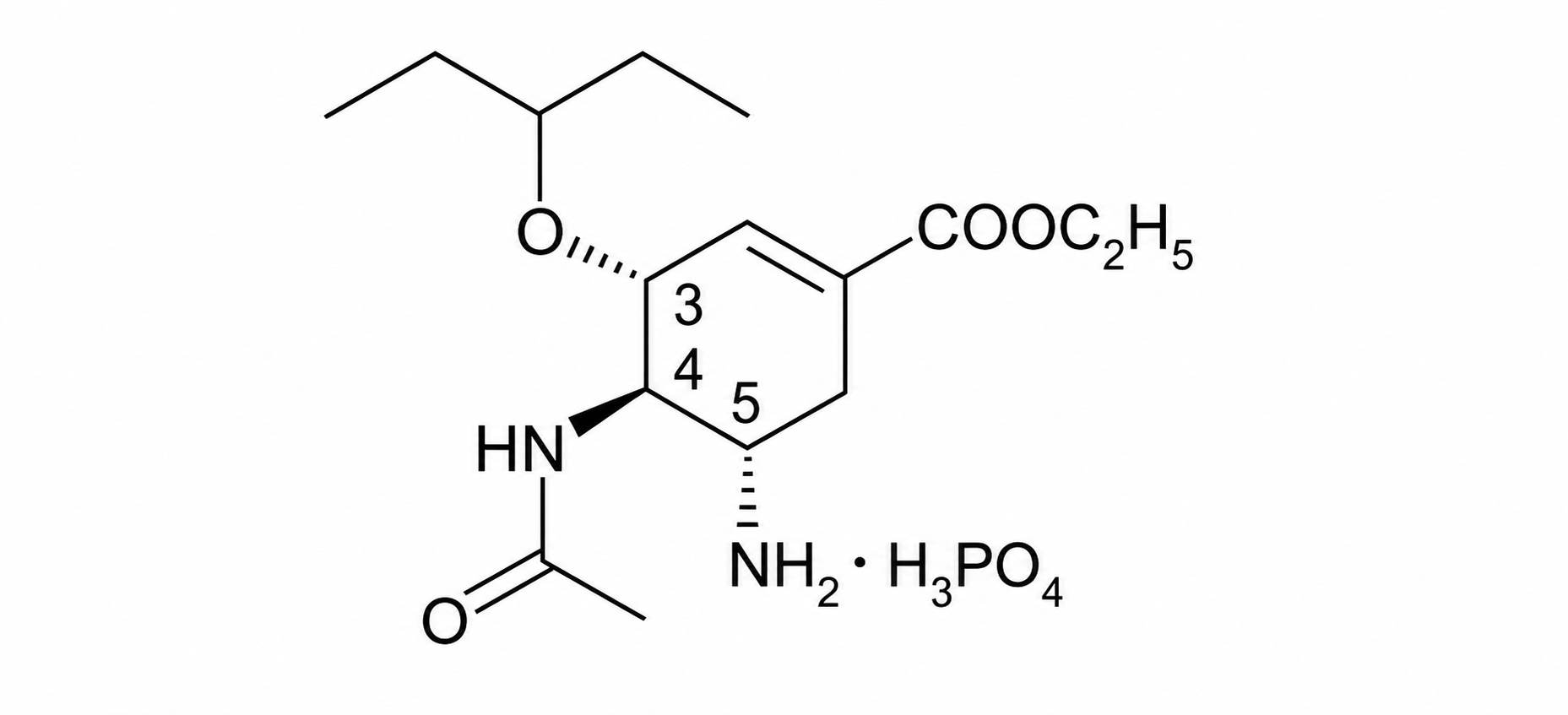
7.0 Description
Tamibid Suspension (oseltamivir phosphate), an influenza neuraminidase inhibitor (NAI), is available as a powder for oral suspension, which when constituted with water as directed contains 12 mg per mL oseltamivir base.
Chemical Name: (3R,4R,5S)-4-acetylamino-5-amino-3(1 ethylpropoxy)-1-cyclohexene-1-carboxylic acid, ethyl ester, phosphate (1:1).
Molecular formula: C16H28N2O4 (free base).
Molecular weight: 312.4 for oseltamivir free base and 410.4 for oseltamivir phosphate salt.
8.0 Pharmaceutical Particulars
8.1 Incompatibilities
None.
8.2 Shelf-Life
8.3 Packaging Information
8.4 Storage and Handling Instructions
Store at a temperature not exceeding 25ºC, protected from light & moisture. Do not Freeze.
Store the reconstituted suspension in the refrigerator between 2ºC to 8ºC. Content to be consumed within 7 days of preparation.
Any extra portion left to be thrown away.
9.0 Patient Counselling Information
Serious Skin/Hypersensitivity Reactions Advise patients and/or caregivers of the risk of severe allergic reactions (including anaphylaxis) or serious skin reactions. Instruct patients and/or caregiver to stop oseltamivir phosphate for oral suspension and seek immediate medical attention if an allergic-like reaction occurs or is suspected.
Neuropsychiatric Events Advise patients and/or caregivers of the risk of neuropsychiatric events in oseltamivir phosphate for oral suspension-treated patients with influenza and instruct patients to contact their physician if they experience signs of abnormal behaviour while receiving oseltamivir phosphate for oral suspension.
Important Dosing Information Instruct patients to begin treatment with oseltamivir phosphate for oral suspension as soon as possible from the first appearance of flu symptoms, within 48 hours of onset of symptoms. Similarly, instruct patients to start taking oseltamivir phosphate for oral suspension for prevention as soon as possible after exposure. Instruct patients to take any missed doses as soon as they remember, except if it is near the next scheduled dose (within 2 hours) and then continue to take oseltamivir phosphate for oral suspension at the usual times.
Influenza Vaccines Instruct patients that oseltamivir phosphate for oral suspension is not a substitute for receiving an annual flu vaccination. Patients should continue receiving an annual flu vaccination according to guidelines on immunization practices. Because of the potential for oseltamivir phosphate for oral suspension to inhibit replication of live attenuated influenza vaccine (LAIV) and possibly reduce efficacy of LAIV, avoid administration of LAIV within 2 weeks or 48 hours after oseltamivir phosphate for oral suspension administration, unless medically necessary.
10. Details of Manufacturer
11.0 Details of Permission or License Number with Date