4.0 Clinical Particulars
4.1 Therapeutic Indications
Paracetamol Solution for Infusion is indicated for the short-term treatment of moderate pain, especially following surgery and for the short-term treatment of fever, when administration by intravenous route is clinically justified by an urgent need to treat pain or hyperthermia and/or when other routes of administration are not possible.
4.2 Posology and Method of Administration
Intravenous route
The 100 ml bottle is restricted to adults, adolescents and children weighing more than 33 kg.
Posology
- Adolescents and adults weighing more than 50 kg: Paracetamol 1 g per administration, i.e. one 100 ml botte, up to four times a day. The minimum interval between each administration must be 4 hours. The maximum daily dose must not exceed 4 g.
- Children weighing more than 33 kg (approximately 11 years old), adolescents and adults weighing less than 50 kg: Paracetamol 15 mg/kg per administration, ie. 1.5 ml solution per kg upto four times a day. The minimum interval between each administration must be 4 hours. The maximum daily dose must not exceed 60 mg/kg (without exceeding 3 g)
- Children weighing more than 10 kg (approximately 1 year old) and weighing less than 33 kg: Paracetamol 15 mg/kg per administration, i.e. 1.5 ml solution per kg upto four times a day. The minimum interval between each administration must be 4 hours. The maximum daily dose must not exceed 60 mg/kg (without exceeding 2 g)
- Term newborn infants, infants, toddlers and children weighing less than 10 kg (up to approximately 1 year old): Paracetamol 7.5 mg/kg per administration, i.e. 0.75 ml solution per kg up to four times a day. The minimum interval between each administration must be 4 hours. The maximum daily dose must not exceed 30 mg/kg. No safety and efficacy data are available for premature neonates.
Severe renal insufficiency
It is recommended, when giving paracetamol to patients with severe renal impairment (creatinine clearance 30 mL/min), to increase the minimum interval between each administration to 6 hours.
In adults with hepatocellular insufficiency, chronic alcoholism, chronic malnutrition (low reserves of hepatic glutathione), dehydration: The maximum daily dose must not exceed 3 g.
Method of administration
The paracetamol solution is administered as a 15-minute intravenous infusion.
4.3 Contraindications
- In patients with hypersensitivity to paracetamol or to propacetamol hydrochloride (prodrug of paracetamol) or to one of the excipients listed in the formulation.
- In cases of severe hepatocellular insufficiency.
4.4 Special Warnings and Precautions for use
Warnings
It is recommended to use a suitable analgesic oral treatment as soon as this administration route is possible.
In order to avoid the risk of overdose, check that other medicines administered do not contain either paracetamol or propacetamol.
Doses higher than the recommended entails risk for very serious liver damage. Clinical symptoms and signs of liver damage (including fulminant hepatitis, hepatic failure, cholestatic hepatitis, cytolytic hepatitis) are usually first seen after two days of drug administration with a peak seen usually after 4 - 6 days. Treatment with antidote should be given as soon as possible.
This medicinal product contains less than 1 mmol sodium (23mg) per 100ml of Paracetamol Solution for Infusion, i.e. essentially "sodium free".
Precautions for use
Paracetamol should be used with caution in cases of
- Hepatocellular insufficiency,
- Severe renal insufficiency (creatinine clearance 30 mL/min),
- Chronic alcoholism,
- Chronic malnutrition (low reserves of hepatic glutathione),
- Dehydration
4.5 Drug Interactions
- Probenecid causes an almost 2-fold reduction in clearance of paracetamol by inhibiting its conjugation with glucuronic acid. A reduction of the paracetamol dose should be considered for concomitant treatment with probenecid,
- Salicylamide may prolong the elimination t1/2 of paracetamol
- Caution should be paid to the concomitant intake of enzyme-inducing substances
- Concomitant use of paracetamol (4 g per day for at least 4 days) with oral anticoagulants may lead to slight variations of INR values. In this case, increased monitoring of INR values should be conducted during the period of concomitant use as well as for 1 week after paracetamol treatment has been discontinued.
4.6 Use in Special Population
Pregnancy
Clinical experience of intravenous administration of paracetamol is limited. However, epidemiological data from the use of oral therapeutic doses of paracetamol indicate no undesirable effects on the pregnancy or on the health of the foetus / newborn infant.
Prospective data on pregnancies exposed to overdoses did not show an increase in malformation risk.
Reproductive studies with the intravenous form of paracetamol have not been performed in animals. However, studies with the oral route did not show any malformation of fetotoxic effects.
Nevertheless, Paracetamol Solution for Infusion should only be used during pregnancy after a careful benefit-risk assessment. In this case, the recommended posology and duration must be strictly observed.
Lactation
After oral administration, paracetamol is excreted into breast milk in small quantities. No undesirable effects on nursing infants have been reported. Consequently, Paracetamol Solution for Infusion may be used in breast-feeding women.
4.7 Effects on Ability to Drive and Use Machines
Not relevant.
4.8 Undesirable Effects
| System Organ Class | Rare (≥1/10 000 to <1/1000) | Very rare (<1/10 000) | Not known (cannot be estimated from the available data) |
|---|---|---|---|
| Blood and lymphatic system disorders | — | Thrombocytopenia, Leucopenia, Neutropenia | — |
| Immune system disorders | — | Hypersensitivity reaction | — |
| Metabolism and nutrition disorders | — | High anion gap metabolic acidosis | — |
| Cardiac disorders | — | — | Tachycardia |
| Vascular disorders | Hypotension | — | Flushing |
| Hepatobiliary disorders | Increased levels of hepatic transaminases | — | — |
| Skin and subcutaneous tissue disorders | — | Serious skin reactions | Pruritus, Erythema, Fixed drug eruption |
| General disorders and administration site conditions | Malaise | — | — |
Reporting of Suspected Adverse Reactions
Reporting suspected adverse reactions after authorization of the medicinal product is important. It allows continued monitoring of the benefit/risk balance of the medicinal product. Healthcare professionals are asked to report any suspected adverse reactions via email to: medico@zorvia.com
By reporting side effects, you can help provide more information on the safety of this medicine.
4.9 Overdose
There is a risk of liver injury (including fulminant hepatitis, hepatic failure, cholestatic hepatitis, cytolytic hepatitis), particularly in elderly subjects, in young children, in patients with liver disease, in cases of chronic alcoholism, in patients with chronic malnutrition and in patients receiving enzyme inducers. Overdosing may be fatal in these cases.
- Symptoms generally appear within the first 24 hours and comprise: nausea, vomiting, anorexia, pallor, abdominal pain. Overdose, 7.5 g or more of paracetamol in a single administration in adults and 140 mg/kg of body weight in a single administration in children, causes hepatic cytolysis likely to induce complete and irreversible necrosis, resulting in hepatocellular insufficiency, metabolic acidosis and encephalopathy which may lead to coma and death. Simultaneously, increased levels of hepatic transaminases (AST, ALT), lactate dehydrogenase and bilirubin are observed together with decreased prothrombin levels that may appear 12 to 48 hours after administration. Clinical symptoms of liver damage are usually evident initially after two days and reach a maximum after 4 to 6 days.
Emergency measures
- Immediate hospitalisation.
- Before beginning treatment, take a tube of blood for plasma paracetamol assay, as soon as possible after the overdose.
- The treatment includes administration of the antidote, N-acetylcysteine (NAC), by the IV. or oral route, if possible before the 10th hour. NAC can, however, give some degree protection even after 10 hours, but in these cases prolonged treatment is given.
- Symptomatic treatment.
- Hepatic tests must be carried out at the beginning of treatment and repeated every 24 hours. In most cases hepatic transaminases return to normal in one to two weeks with full restitution of liver function. In very severe cases, however, liver transplantation may be necessary.
5.0 Pharmacological Properties
5.1 Mechanism of action / Pharmacodynamic properties
The precise mechanism of the analgesic and antipyretic properties of paracetamol has yet to be established; it may involve central and peripheral actions. Paracetamol Solution for Infusion provides onset of pain relief within 5 to 10 minutes after the start of administration. The peak analgesic effect is obtained in 1 hour and the duration of this effect is usually 4 to 6 hours.
Paracetamol Solution for Infusion reduces fever within 30 minutes after the start of administration with a duration of the antipyretic effect of at least 6 hours.
5.2 Pharmacokinetic properties
Adults
Absorption
Paracetamol pharmacokinetics is linear up to 2 g after single administration and after repeated administration during 24 hours.
The bioavailability of paracetamol following infusion of 500 mg and 1 g of Paracetamol Solution for Infusion is similar to that observed following infusion of 1 g and 2 g propacetamol (corresponding to 500 mg and 1 g paracetamol respectively). The maximal plasma concentration (Cmax) of paracetamol observed at the end of 15-minutes intravenous infusion of 500 mg and 1 g of Paracetamol Solution for Infusion is about 15 µg/ml and 30 µg/mL respectively.
Distribution
The volume of distribution of paracetamol is approximately 1 L/kg. Paracetamol is not extensively bound to plasma proteins.
Following infusion of 1 g paracetamol, significant concentrations of paracetamol (about 1.5 µg/mL) were observed in the Cerebro Spinal Fluid as and from the 20th minute following infusion.
Metabolism
Paracetamol is metabolised mainly in the liver following two major hepatic pathways: glucuronic acid conjugation and sulphuric acid conjugation. The latter route is rapidly saturable at doses that exceed the therapeutic doses. A small fraction (less than 4%) is metabolised by cytochrome P450 to a reactive intermediate (N-acetyl benzoquinone imine) which, under normal conditions of use, is rapidly detoxified by reduced glutathione and eliminated in the urine after conjugation with cysteine and mercapturic acid. However, during massive overdosing, the quantity of this toxic metabolite is increased.
Elimination
The metabolites of paracetamol are mainly excreted in the urine. 90% of the dose administered is excreted in 24 hours, mainly as glucuronide (60-80%) and sulphate (20-30%) conjugates. Less than 5% is eliminated unchanged. Plasma half-life is 2.7 hours and total body clearance is 18 L/h.
Neonates
Infants and children: The pharmacokinetic parameters of paracetamol observed in infants and children are similar to those observed in adults, except for the plasma half-life that is slightly shorter (1.5 to 2 h) than in adults. In neonates, the plasma half-life is longer than in infants i.e. around 3.5 hours. Neonates, infants and children up to 10 years excrete significantly less glucuronide and more sulphate conjugates than adults.
Renal insufficiency
In cases of severe renal impairment (creatinine clearance 10-30 mL/min), the elimination of paracetamol is slightly delayed, the elimination half-life ranging from 2 to 5.3 hours. For the glucuronide and sulphate conjugates, the elimination rate is 3 times slower in subjects with severe renal impairment than in healthy subjects. Therefore, it is recommended, when giving paracetamol to patients with severe renal impairment (creatinine clearance 30 mL/min), to increase the minimum interval between each administration to 6 hours.
Elderly subjects
The pharmacokinetics and the metabolism of paracetamol are not modified in elderly subjects. No dose adjustment is required in this population.
6.0 Nonclinical Properties
6.1 Animal Toxicology or Pharmacology
Not Applicable.
7.0 Description
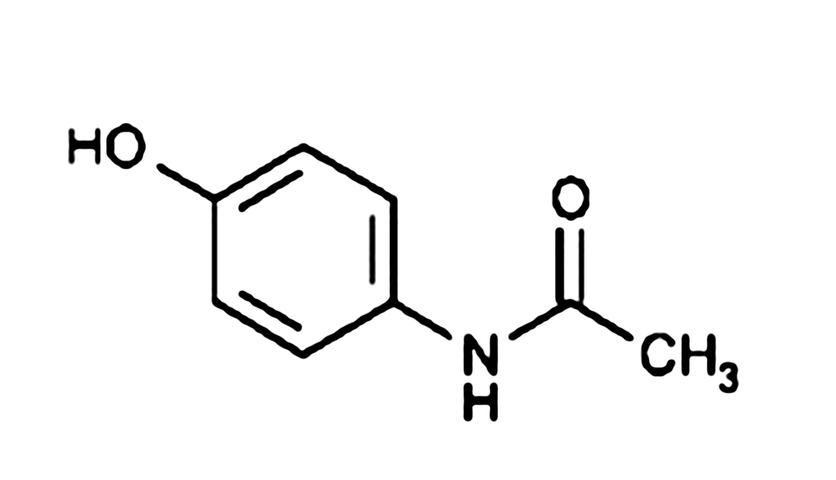
Paracetamol is a non-salicylate antipyretic and non-opioid analgesic agent. Its chemical name is N-acetyl-p-aminophenol.
Molecular weight: 151.16
Structural formula
8.0 Pharmaceutical Particulars
8.1 Incompatibilities
None
8.2 Shelf-Life
Refer on pack
8.3 Packaging Information
Refer on pack
8.4 Storage and Handling Instructions
Store below 30°C. Protect from light. Do not freeze.
Keep medicine out of reach of children
9.0 Patient Counselling Information
- Use only as directed by your doctor: Paracetamol Infusion is administered intravenously by a healthcare professional for the short-term relief of moderate pain and treatment of fever.
- Inform your doctor about your medical history: Tell your doctor if you have liver or kidney problems, chronic alcohol use, malnutrition or dehydration, or if you have previously experienced an allergic reaction to paracetamol.
- Inform your doctor about other medicines: Tell your doctor about all medicines you are taking, particularly other medicines containing paracetamol, anticoagulants such as warfarin, probenecid or medicines that may affect liver function.
- Avoid overdose: Do not receive any additional medicine containing paracetamol unless advised by your doctor. Taking more than the recommended dose may cause serious liver damage, even if you initially feel well.
- Report any allergic reactions: Inform your healthcare professional immediately if you experience difficulty breathing, swelling of the face or throat, or a severe skin rash, blistering or peeling.
- Report other side effects: Tell your doctor if you experience nausea, abdominal pain, unusual tiredness, flushing, dizziness or any other unusual symptoms during or after the infusion.
- Pregnancy and breastfeeding: Inform your doctor if you are pregnant, planning to become pregnant or breastfeeding. This medicine should be used during pregnancy only when considered necessary by your doctor. It may be used during breastfeeding as advised by your doctor.
- Seek immediate medical attention in case of overdose: If you suspect that you have received too much paracetamol, inform your doctor immediately, even if you feel well, as liver damage may develop later.
- Follow the prescribed dose and administration schedule: The infusion is administered over approximately 15 minutes. Your doctor will determine the appropriate dose and interval based on your body weight, age and medical condition.
10. Details of Manufacturer
Aishwarya Lifesciences
Plot No. 11, Ind. Area, VPO-Lodhimajra, Baddi, Distt-Solan, (H.P.)-174101 (INDIA)
11. Details of permission or licence number with date
Mfg. Lic. No. : LVP/11/06
Dated : 26/11/2021
12. Date of Revision
18/11/2026
Marketed by:
Zorvia Healthcare Limited
Suite 4, 10th Floor, “Centaurus”, Central Avenue, Hiranandani Estate,
Ghodbunder Road, Thane West, Maharashtra 400607, India.
TM : Trademark of Eris Lifesciences Limited, used under license.