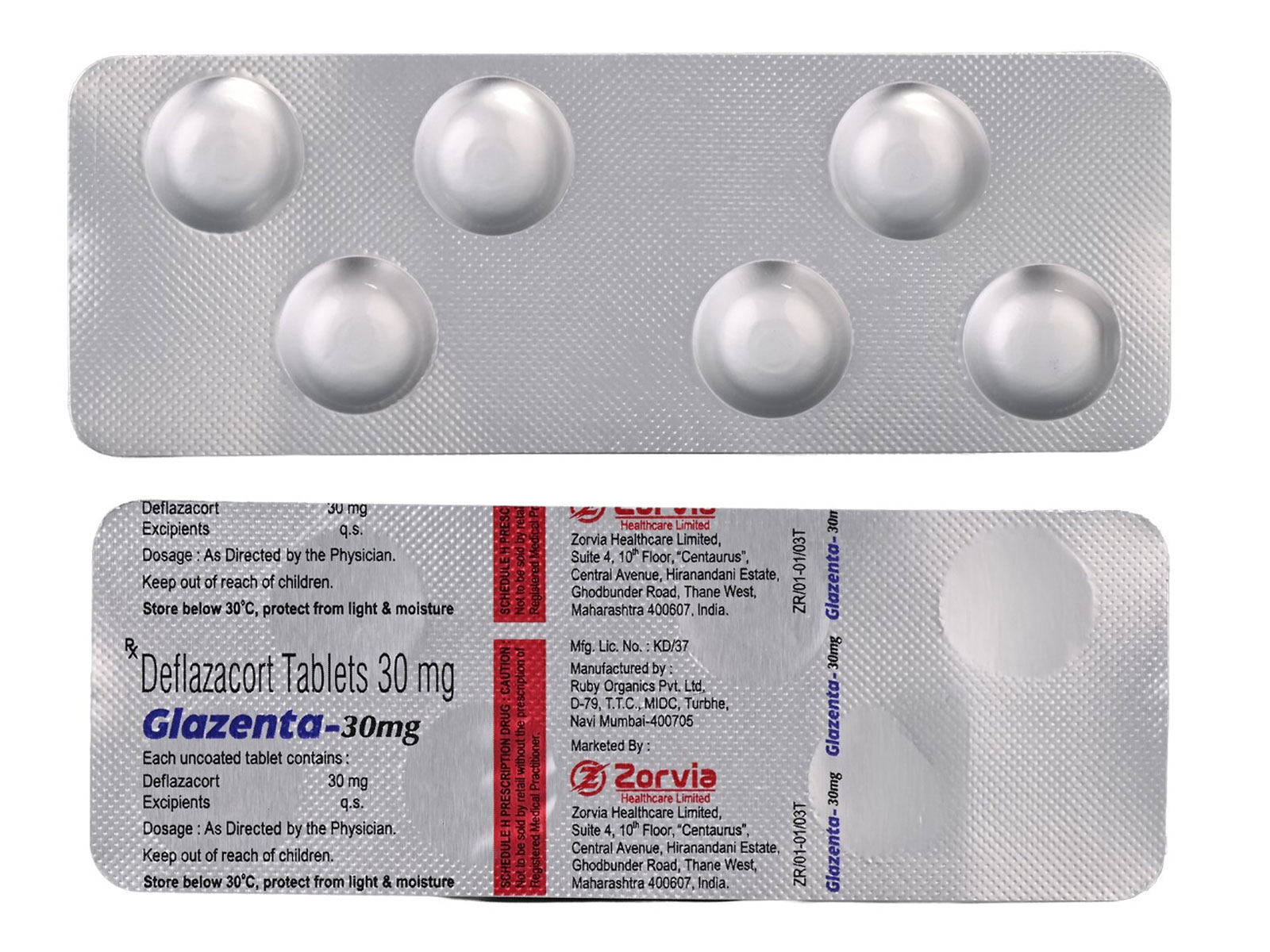
Read all this leaflet carefully before you start taking this medicine because it contains important information for you.
Keep this leaflet. You may need to read it again.
If you have any further questions, ask your doctor or pharmacist.
This medicine has been prescribed for you only. Do not pass it on to others.
If you get any side effects, talk to your doctor or pharmacist.
What is there in this page ?
What Glazenta Suspension/ Glazenta-XL Suspension is and what it is used for
What you need to know before you take Glazenta Suspension/ Glazenta-XL Suspension
How to take Glazenta Suspension/ Glazenta-XL Suspension
Possible side effects
How to store Glazenta Suspension/ Glazenta-XL Suspension
Contents of the pack and other information
1. What Glazenta Suspension/ Glazenta-XL Suspension is and what it is used for
The name of your medicine is Glazenta Suspension/ Glazenta-XL Suspension (called Glazenta throughout this leaflet). Glazenta is a steroid medicine. Their full name is glucocorticoids.
How Glazenta works
These corticosteroids occur naturally in the body and help to maintain health and wellbeing.
Boosting your body with extra corticosteroid (such as Glazenta) is an effective way to treat various illnesses involving inflammation in the body.
Glazenta works by reducing this inflammation, which could otherwise go on making your condition worse.
Glazenta also works by stopping reactions known as autoimmune reactions. These reactions happen when your body’s immune system attacks the body itself and causes damage.
You must take this medicine regularly to get maximum benefit from it.
Glazenta can be used to:
Treat inflammation including asthma, arthritis and allergies.
Treat problems with your skin, kidney, heart, digestive system, eyes or blood.
Suppress the immune system in transplant operations.
2. What you need to know before you take Glazenta Suspension/ Glazenta-XL Suspension
Do not take this medicine and tell your doctor if:
You are allergic (hypersensitive) to deflazacort or any of the other ingredients in these Suspension. Signs of an allergic reaction include: a rash, swallowing or breathing problems, swelling of your lips, face, throat or tongue.
You have an infection that affects your whole body (systemic infection), which is not already being treated.
You are having or have recently had any vaccinations with live viruses.
Do not take this medicine if any of the above apply to you. If you are not sure, talk to your doctor or pharmacist before taking Glazenta.
Take special care and check with your doctor before you take Glazenta if:
You have ever had severe depression or manic-depression (bipolar disorder). This includes having had depression before while taking steroid medicines like Glazenta.
Any of your close family has had these illnesses.
You have or ever had mental problems such as depression or psychoses.
If any of the above applies to you, talk to a doctor before taking Glazenta.
Mental problems while taking Glazenta
Mental health problems can happen while taking steroids like Glazenta.
These illnesses can be serious.
Usually they start within a few days or weeks of starting the medicine.
They are more likely to happen at high doses.
Most of these problems go away if the dose is lowered or the medicine is stopped. However, if problems do happen, they might need treatment.
Talk to a doctor if you (or someone taking this medicine), show any signs of mental problems. This is particularly important if you are depressed or might be thinking about suicide. In a few cases, mental problems have happened when doses are being lowered or stopped.
Check with your doctor before taking this medicine if:
You have epilepsy (fits).
You or anyone in your family has diabetes.
You have high blood pressure.
You have kidney, liver or heart problems.
You have brittle or weak bones called osteoporosis.
You have an eye disease that causes detachment of your retina and bulging eyes.
You or anyone in your family has an eye problem called glaucoma.
You have an underactive thyroid gland.
You have problems with your digestive system, including your food pipe (oesophagitis), gut (ulcerative colitis, diverticulitis) or stomach (peptic ulcer).
You have ever had a bad reaction such as muscle weakness to any steroid.
You have or ever had an infection caused by a virus or fungus. This includes infections such as athlete’s foot, thrush and cold sores (that may also affect the eye).
You have or ever had ‘tuberculosis’ (TB).
You have any problems with your blood vessels such as a blood clot.
You have a pheochromocytoma (a tumour of adrenal gland tissue. The adrenal glands are located above the kidneys.).
Glazenta may cause inflammation of tendons and easy tearing especially when given together with antibiotics such as ciprofloxacin.
Irregular periods in women and blood problems such as leukocytosis (increase in white blood cells count) may also occur.
If any of the above apply to you, your doctor may want to see you more often during your treatment.
Contact your doctor if you experience blurred vision or other visual disturbances.
Taking other medicines
Please tell your doctor or pharmacist if you are taking or have recently taken any other medicines. This includes medicines you obtain without a prescription, including herbal medicines. This is because Glazenta and other medicines can affect the way some other medicines work.
Some medicines may increase the effects of Glazenta and your doctor may wish to monitor you carefully if you are taking these medicines (including some medicines for HIV: ritonavir, cobicistat).
In particular, check with your doctor if you are taking any of the following medicines. Your doctor may want to change the dose of Glazenta, or the other medicine.
Painkillers such as aspirin.
Aminoglutethimide - used for some types of cancer.
Ketoconazole - used to treat infections.
Water tablets (diuretics) such as spironolactone, triamterene or amiloride.
Medicines for thinning your blood (such as warfarin).
Medicines for diabetes.
Medicines for epilepsy such as phenobarbitone, primidone, phenytoin, carbamazepine, acetazolamide.
Medicines which contain oestrogens including oral contraceptives.
Medicines for tuberculosis (TB) such as rifampicin or rifabutin.
Medicines for high blood pressure.
Medicines for indigestion and heartburn (antacids). If you are taking an antacid leave at least 2 hours between taking it and Glazenta.
Medicines for asthma such as salbutamol and theophylline.
Vaccinations
If you have just had any injections or vaccinations, tell your doctor before you take Glazenta.
If you are going to have any injections or vaccinations, tell your doctor or nurse you are taking Glazenta. This includes those needed for a foreign holiday. Some vaccines should not be given to patients taking Glazenta. This is because Glazenta can affect the way some vaccines work.
Operations
If you are going to have an operation, tell your doctor or nurse you are taking Glazenta.
Muscle relaxants are sometimes used during an operation or in intensive care unit. Glazenta and muscle relaxants can affect one another.
Pregnancy and breast-feeding
Not applicable.
Driving and using machines
Not applicable.
Chickenpox, measles or shingles
If you get chickenpox, measles or shingles while taking Glazenta, you can become seriously ill.
Keep away from people who have chickenpox, measles or shingles, if you have never had them. They could affect you severely. If you do come into contact with chickenpox, measles or shingles, see your doctor straight away. Your doctor may want to give you a vaccination to help you from getting these infections.
If you do catch Chickenpox, measles or shingles, tell your doctor straight away. Your doctor will advise you on how to take Glazenta.
3. How to take Glazenta Suspension/ Glazenta-XL Suspension
Always take Glazenta exactly as your doctor has told you. The dose will depend on the illness being treated and any other medicines you are taking. You should check with your doctor or pharmacist if you are not sure.
Taking this medicine
Take this medicine by mouth. It is important to take your medicine at the right times.
Children
Glazenta may be given every day or every other day.
The doctor will work out the dose based on your child’s age and weight.
Your child will be given the lowest possible dose.
The usual dose for chronic arthritis is between 0.25 mg and 1 mg of the medicine for each kg of your child’s bodyweight, each day. The usual dose for kidney problems (nephrotic syndrome) is 1.5 mg of the medicine for each kg of your child’s bodyweight, each day. Depending on how well the medicine works for your child, this dose may then be slowly lowered.
The usual dose for asthma is between 0.25 mg and 1 mg of the medicine for each kg of your child’s bodyweight, every other day.
In infants, an echocardiogram (ultrasound) should be performed by the doctor to monitor the structure and function of the muscular tissue of the heart.
If you take more Glazenta than you should
Tell your doctor or go to the nearest hospital casualty department straight away.
Remember to take with you bottle that are left and the pack. This is so the doctor knows what you have taken.
If you forget to take Glazenta
If you forget to take a dose take it as soon as you remember, unless it is time for your next dose. Do not take a double dose to make up for a forgotten dose.
Stopping treatment
You need to take Glazenta regularly to get the maximum benefit.
Do not stop taking this medicine without talking to your doctor – you may need to lower the dose gradually.
Stopping the treatment suddenly can sometimes cause problems such as a high temperature, a runny nose, sore, red, sticky eyes, aching muscles and joints, itchy skin and weight loss. Also, sickness (vomiting), headaches and drowsiness – this is more likely to happen in children.
You may also notice the following symptoms if you stop treatment with Glazenta.
If this happens, tell a doctor straight away as these could be signs of a serious illness:
Sudden, severe pain in the back, stomach and legs.
Being sick (vomiting) and diarrhoea.
Feeling faint or dizzy, this could be a sign of low blood pressure.
4. Possible side effects
Like all medicines, Glazenta can cause side effects, although not everybody gets them.
Stop taking your medicine and see a doctor or go to a hospital straight away if:
Uncommon (affects 1 to 10 users in 1,000)
You get swelling of the hands, feet, ankles, face, lips or throat which may cause difficulty in swallowing or breathing. You could also notice an itchy, lumpy rash (hives) or nettle rash (urticaria). This may mean you are having an allergic reaction to Glazenta.
You pass black tarry stools or notice fresh or clotted blood in your stools (faeces). You may also notice dark bits that look like coffee grounds in your vomit. These could be signs of a stomach ulcer.
Not known (frequency cannot be estimated from the available data)
You get severe stomach pain which may reach through to your back. This could be a sign of pancreatitis.
Serious effects: Tell a doctor straight away if you notice any of the following side effects:
Steroids including Glazenta can cause serious mental health problems. These are common in both adults and children. They can affect about 5 in every 100 people taking medicines like Glazenta.
Serious effects: Tell a doctor straight away if you notice any of the following side effects.
Uncommon (affects 1 to 10 users in 1,000)
Feeling depressed, including thinking about suicide.
Not known (frequency cannot be estimated from the available data)
Feeling high (mania) or moods that go up and down.
Feeling anxious, having problems sleeping, difficulty in thinking or being confused and losing your memory.
Feeling, seeing or hearing things which do not exist. Having strange and frightening thoughts, changing how you act or having feelings of being alone.
Pheochromocytoma crisis (symptoms can include an awareness of your heartbeat, increase in heart rate (palpitations), excessive sweating, high blood pressure, severe headaches or have a tremor (feeling shaky)). Other serious side effects include Not known (frequency cannot be estimated from the available data).
A very sore throat. You may also have difficulty in swallowing and the inside of your mouth may have white areas on the surface.
Headache, which is usually worse in the morning, on coughing or straining, and feeling sick (nausea). Also, fits, fainting, eyesight problems, painful eyes or confusion can occur.
In infants with a low birth weight a heart muscle disease (hypertrophic cardiomyopathy) may occur.
If you notice any of these problems talk to a doctor straight away.
Other side effects:
Please tell your doctor or pharmacist if any of the following side effects gets serious or lasts longer than a few days.
Uncommon (affects 1 to 10 users in 1,000)
Stomach or bowel problems such as feeling full or bloated, indigestion, heartburn or stomach pain.
Increase in appetite and weight gain including around your face. Or, you may lose weight or feel weak.
Hair, including body or facial hair, grows more than normal.
Increased thirst and needing to pass water more often than usual. These could be signs of diabetes. If you are already diabetic, your doctor may prescribe more of your diabetes medicine to balance the effects of deflazacort. You should discuss this with your doctor.
Raised blood pressure and increased water retention.
Tiredness, confusion, muscle weakness or muscle cramps. This may be due to low levels of potassium in your body.
Mood changes, difficulty in sleeping.
If you have had tuberculosis (TB) in the past it may return.
Skin problems such as acne, appearance of stretch marks.
You may get infections more easily than usual.
Rare (affects 1 to 10 users in 10,000)
Bleeding under the skin, redness.
General muscle weakness or tiredness.
Not known (frequency cannot be estimated from the available data)
Bones and tendons may break or tear more easily than usual. Also tendons may get inflamed and become painful.
Irregular periods in women or they may stop altogether.
Becoming dependent on deflazacort (also called psychological dependence).
If you have schizophrenia your symptoms may get worse.
Fungal infection such as thrush.
Eye disease that causes detachment of the retina and bulging eyes.
Eye problems such as glaucoma and cataracts can happen if you take this medicine for a long time.
Eye infections (viral) may spread or return if you have had them in the past.
Blurred vision.
Increase in the risk of clots forming in your blood.
Blood problems such as leukocytosis.
Wounds and cuts do not heal as quickly as usual.
Noticeable blood vessels, thinning of the skin.
Sudden or severe muscle weakness or tiredness following an operation.
Some of the side effects are more likely to happen if you are elderly.
Children and teenagers taking this medicine may grow less than normal.
(Not known: frequency cannot be estimated from the available data). If you think this is happening to a child, tell your doctor.